
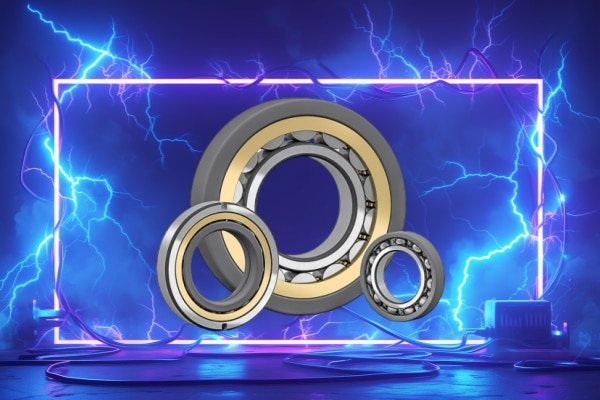

How They Work, Why They Matter, Types, Applications, Pros & Cons, and Selection Guide
Introduction
Electrical damage is one of the most common causes of premature bearing failure in modern electric motors, generators, and variable-frequency-drive (VFD) systems. When stray currents pass through a standard bearing, they can create sparks, burn marks, fluting, and lubrication breakdown — leading to noisy operation, overheating, costly downtime, and even complete machine failure.
To solve this problem, electrically insulated bearings were developed. These bearings include special insulating coatings or ceramic components that block stray electrical currents from flowing through the bearing’s rolling contact surfaces.
In this complete guide, you will learn:
- What electrically insulated bearings are
- How they work (coatings, ceramic materials, insulation mechanisms)
- Different types and their pros/cons
- Their applications in electric motors, wind turbines, rail traction motors, and industrial machinery
- How to choose the right insulated bearing
- Installation & maintenance best practices
Let’s begin by understanding what these bearings really are — and why they matter.
Definition & Why Electrically Insulated Bearings Exist
What Is an Electrically Insulated Bearing?
An electrically insulated bearing is a rolling-element bearing designed with a non-conductive layer that prevents electrical current from passing through the bearing rings or rolling elements. This insulated layer can be:
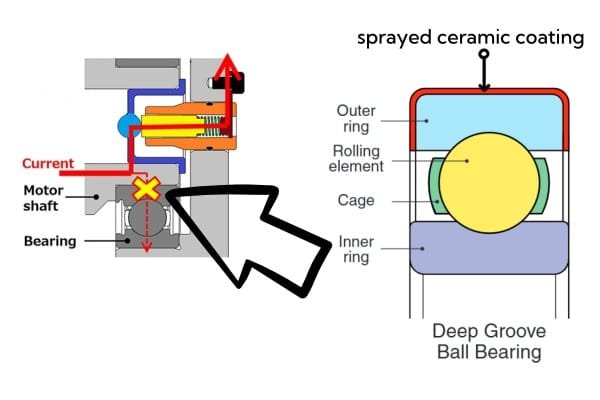
- A sprayed ceramic coating on the outer or inner ring
- Ceramic rolling elements (in hybrid bearings)
- A full ceramic ring or ball configuration
The goal is simple: create an electrical barrier that blocks current flow.
Why Standard Bearings Fail — Shaft Voltage & Stray Currents
In electric motors and generators, electrical imbalances and electromagnetic fields can cause:
- Shaft voltage buildup
- Common-mode voltage
- Stray circulating currents
When the motor shaft rotates, these voltages attempt to discharge through the easiest conductive path — often the bearings. This creates micro-arcs or sparks at the contact points.
Key Problems Caused by Electrical Current
- Electrical erosion / EDM pitting (tiny burn craters)
- Fluting (washboard-like grooves on the raceway)
- Lubrication degradation (thermal breakdown)
- Noise & vibration issues
- Premature bearing failure
How Electrically Insulated Bearings Work (Insulation Mechanisms)
Insulating Coatings on Inner/Outer Rings
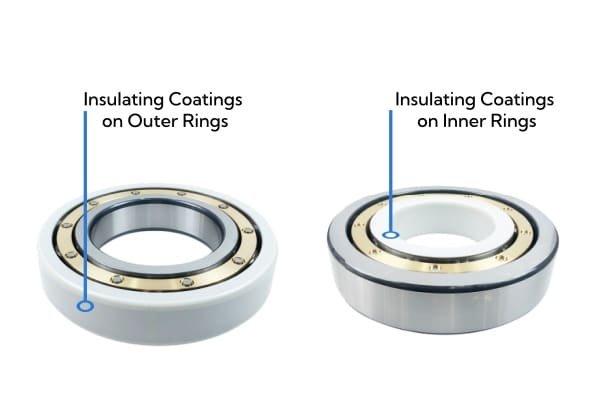
The most common type uses a ceramic-based coating (often aluminum-oxide) applied via plasma spray. Characteristics include:
- High dielectric strength
- Uniform thickness
- Excellent adhesion to steel rings
- Resistance to heat, corrosion, moisture
The coating typically provides insulation up to 1,000V (depending on manufacturer).
Hybrid Bearings (Ceramic Rolling Elements)
Instead of steel balls, hybrid bearings use silicon nitride (Si3N4) ceramic balls. Advantages include:
- Naturally non-conductive
- 60% lighter and harder than steel
- Lower friction
- Higher speed capability
- Excellent in high-temperature and poor-lubrication environments
Insulation Performance Metrics
- Dielectric strength (voltage withstand capability)
- Insulation resistance (MΩ or GΩ ratings)
- Coating thickness (typically 100–300 μm)
- Environmental stability (moisture, temperature)
Types of Electrically Insulated Bearings
Coated Insulated Bearings
Uses plasma-sprayed ceramic on the outer or inner ring. Best for standard motors and general industrial use.
Inner-Ring vs Outer-Ring Insulation
- Outer-ring insulated bearings: most common, easiest to install
- Inner-ring insulated bearings: used when outer-ring grounding is required
Hybrid / Ceramic Bearings
These bearings use ceramic balls + steel rings. They provide extremely reliable electrical insulation and premium performance for high-speed / VFD / wind turbine applications.
Bearing-Type Variants
Common formats include:
- Deep groove ball bearings
- Cylindrical roller bearings
- Spherical roller bearings
- Tapered roller bearings
Applications & Use Cases of Insulated Bearings
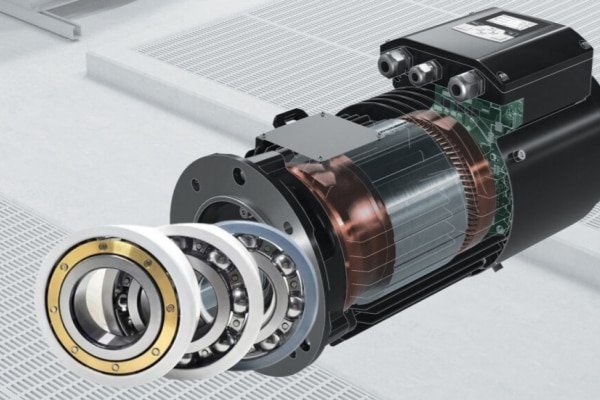
Electric Motors & Generators
Especially those driven by:
- Variable-Frequency Drives (VFDs)
- High-voltage systems
- Inverters
- PWM-controlled systems
VFDs generate harmonic voltage and common-mode currents, making insulation essential.
Wind Turbine Generators
Insulated bearings help resist high-frequency currents, moisture exposure, and temperature cycling.
Rail Traction Motors
Used in locomotives, metro vehicles, and rail transport to prevent current transfer through axles.
Industrial Machinery
- Compressors
- Pumps
- Conveyors
- Mining and metallurgy equipment
Benefits of Electrically Insulated Bearings
Prevent Electrical Damage Completely
Stops stray current from flowing into the bearing — preventing EDM, fluting, and raceway damage.
Longer Service Life & Lower Maintenance Costs
Equipment experiences less wear, leading to longer intervals between replacements, less downtime, and lower repair costs.
Reliability in Harsh Operating Environments
Resists moisture, humidity, corrosion, and temperature changes.
Improved Motor Efficiency & Performance
Stable lubrication, smoother operation, and lower friction improve machine performance.
Limitations, Risks & When Not to Use Insulated Bearings
Higher Upfront Cost
Typically 1.5×–3× the price of standard bearings.
Insulation Layer Can Be Damaged
Coating can be compromised by improper installation, excessive axial force, impact damage, or overheating.
Not a Complete Solution in All Systems
In some cases, insulated bearings alone cannot eliminate all currents — additional grounding brushes or filters may be required.
Lubrication Still Critical
Electrical insulation does not protect against lubrication failure, contamination, or overload.
How to Select the Right Electrically Insulated Bearing
Determine if Your System Has Shaft Voltage or Stray Currents
Indicators include:
- VFD usage
- High-frequency switching
- Unexplained bearing failures
- Past signs of pitting or fluting
Match Bearing Type to Application
- Coated bearings → general motors
- Hybrid bearings → high-speed, high-frequency environments
- Inner-ring insulated → when grounding must occur via outer ring
Consider Environmental Conditions
- Temperature
- Humidity
- Chemical exposure
- Load and speed requirements
Check Voltage Withstand Rating
Ensure dielectric strength meets system requirements (e.g., 500V, 1000V).
Installation, Maintenance & Inspection Best Practices
Proper Handling During Installation
Avoid hammering or applying force across the insulation layer. Use a press or induction heater appropriately.
Regular Insulation Resistance Testing
Use a megohmmeter to ensure coating integrity. Test periodically:
- Every maintenance cycle
- After machine overhauls
- When electrical noise increases
Lubrication Best Practices
Choose lubricants suitable for electrical environments, high speeds, and high loads. Follow manufacturer recommendations.
Monitoring Performance
Watch for:
- Abnormal noise
- Increased vibration
- Higher operating temperature
Frequently Asked Questions (FAQ)
Do insulated bearings completely eliminate shaft currents?
They significantly reduce them but may not solve the issue entirely in high-frequency environments — grounding may still be needed.
Can standard bearings be retrofitted with insulation?
Yes, with coating applications — but reliability and lifespan vary.
Are hybrid bearings always better?
Hybrid bearings offer superior performance but are much more expensive.
Will insulated bearings fit standard motors?
Yes — they are dimensionally interchangeable with standard bearings.
Summary & Final Recommendations
Electrically insulated bearings provide an essential solution for preventing electrical erosion in motors, generators, and modern VFD-driven equipment. By blocking stray current through coatings or ceramic materials, they significantly extend bearing life, improve reliability, and reduce maintenance costs.
When selecting a bearing, always consider your system’s voltage characteristics, whether you use VFDs or inverter drives, environmental conditions, expected lifespan, and whether coated or hybrid bearings are best suited. With proper installation and maintenance, insulated bearings can dramatically improve performance and help avoid costly machine downtime.
