
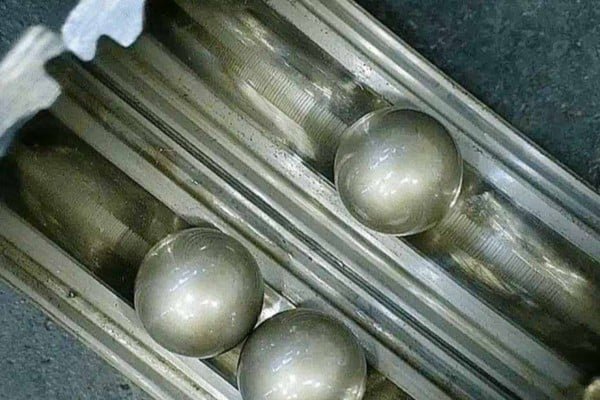

Stray current has become one of the most common—and costly—sources of premature motor bearing failure in modern industrial systems. As VFD-driven motors, high-efficiency designs, and compact industrial equipment grow across North America, the electrical stress placed on motor shafts and bearings increases significantly. Understanding how stray current forms, how it enters bearings, and how to prevent electrical discharge damage is essential for reliability engineers, maintenance teams, and equipment manufacturers.
Throughout this article, you’ll discover:
- The technical definition of stray current and how it forms inside electric motors
- How shaft voltage buildup leads to electrical discharge machining (EDM) in bearings
- The major types of electrical damage: pitting, fluting, grease degradation, and raceway washboarding
- Why VFDs dramatically increase bearing current risks in industrial systems
- Where stray current is most common across HVAC, pumps, conveyors, and high-speed motors
- The advantages and limitations of grounding rings, insulated bearings, and hybrid bearings
- How to choose the correct mitigation method based on application and motor design
Let’s begin by understanding what stray currents really are—and why they matter.
What Is Stray Current in Motors?
Definition of stray current and bearing currents
Stray current—sometimes called bearing current or circulating current—is any unintended electrical current that flows through a motor’s rotating components. When voltage accumulates on the shaft and finds a path to ground through the bearing, it discharges across the oil film, damaging the rolling elements and raceways.
Relationship between shaft voltage, common-mode voltage, and circulating currents
Common-mode voltage generated by the drive–motor system creates an electrical potential between the shaft and the motor frame. This potential forms capacitive coupling between stator, rotor, and bearings. When the film thickness cannot insulate the voltage, the energy discharges as a current pulse, creating EDM (electrical discharge machining) damage.
Why modern VFD-driven motors experience more electrical stress
Pulse-width modulation (PWM) switching in VFDs produces fast voltage rise times (dV/dt), increasing shaft voltage and capacitive coupling. As a result, even motors that historically never experienced bearing currents may now fail early, sometimes within months of operation. This is especially common in HVAC systems, processing plants, and material-handling equipment across the U.S. and Canada.
How Stray Current Enters Motor Bearings
Shaft voltage buildup mechanisms
Shaft voltage builds when high-frequency switching from a VFD induces voltage on the rotor. Additional contributors include unbalanced magnetic fields, rotor asymmetry, and poor grounding paths. The shaft acts as a conductive node until discharge occurs.
Electrical discharge machining (EDM) effect across bearing film
When shaft voltage exceeds the dielectric strength of the grease film, the voltage punctures the lubrication barrier. This releases a rapid current pulse—often in the range of several amperes—producing microscopic craters on the bearing surfaces. Over time, these craters form patterns that severely degrade bearing life.
Current paths: common-mode, capacitive coupling, frame-to-ground leakage
Typical current paths include:
- Common-mode current: driven by VFD switching, seeking the lowest-impedance path.
- Capacitive rotor–stator coupling: a major contributor to shaft voltage buildup.
- Frame-to-ground leakage: worsens with poor grounding or long motor cables.
Conditions that trigger bearing current discharge
Discharge occurs when the lubrication film cannot maintain insulation—typically during low-speed operation, high load conditions, startup, shutdown, or when grease degradation causes thinning of the film. VFD applications amplify these risks dramatically.
Types of Electrical Damage to Motor Bearings
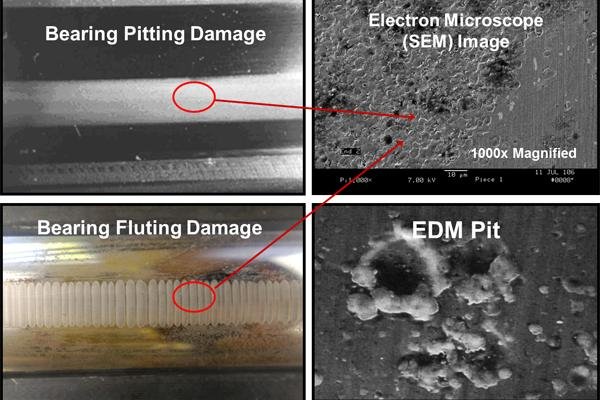
Electrical pitting and micro-craters
EDM strikes leave spherical pits on the raceway and rolling elements. These pits accelerate wear, generate metal debris, and disrupt lubrication flow.
Fluting and washboard patterns on raceways
As EDM strikes accumulate, evenly spaced ridges—known as fluting—form on the bearing raceway. These patterns create distinctive vibration frequencies and are a primary cause of audible noise and premature bearing replacement.
Grease degradation from electrical arcing
Arcing breaks down grease thickeners, forms carbon deposits, and reduces lubrication life. Darkened or burnt grease is a key indicator of electrical damage.
Early-stage symptoms vs. catastrophic failure signs
Early stages may show slight vibration, irregular noise, or elevated temperature. Advanced stages include severe noise, excessive vibration, catastrophic raceway failure, and rotor seizure.
Root Causes of Stray Current in Motors
Variable frequency drives (VFD) and PWM switching
VFDs generate common-mode voltage, high-frequency switching noise, and steep voltage rise times. These factors significantly increase the likelihood of shaft voltage discharge.
Poor grounding or bonding
Improper grounding increases impedance to ground, forcing currents through unintended paths—often through motor bearings.
Unbalanced phase voltages or load
Electrical imbalance produces uneven magnetic forces, further increasing capacitive coupling and rotor voltage buildup.
Motor design factors that amplify capacitive coupling
Compact, high-efficiency motors often exhibit tighter air gaps and higher switching susceptibility, increasing their sensitivity to stray current.
External sources of stray or circulating currents
Nearby equipment, long cable runs, and surrounding electrical infrastructure can induce additional rotor currents.
Applications Where Stray Currents Are Most Common
HVAC compressors
High-efficiency rooftop units and chillers frequently operate with VFDs, making them highly prone to bearing current failures.
Industrial VFD motor systems
Manufacturing lines, conveyors, and mixers often feature continuous VFD operation, increasing cumulative electrical stress.
Pump motors, conveyor motors, elevator motors
These motors often run at variable speeds and experience fluctuating loads—conditions that encourage shaft voltage buildup.
High-speed or inverter-duty motors
Higher rotational speeds reduce lubrication film thickness, increasing susceptibility to EDM discharge.
Advantages & Disadvantages of Different Mitigation Methods
Shaft grounding rings (benefits & limitations)
Benefits: Provides a low-impedance path for shaft voltage, highly effective in VFD environments, cost-efficient.
Limitations: Requires periodic inspection, less effective when contamination or oil ingress occurs.
Insulated bearings (pros/cons, when to use)
Pros: Breaks the current path entirely, ideal for large motors and high-voltage applications.
Cons: Only protects the insulated bearing—circulating currents may shift to the opposite bearing or connected equipment.
Ceramic/hybrid bearings for electrical resistance
Hybrid bearings with ceramic rolling elements block electrical flow while offering high durability. They are effective but carry higher cost and require proper lubrication selection.
Proper grounding practices and filters
Common-mode chokes, dv/dt filters, and proper bonding reduce shaft voltage generation at the source.
How to Select the Right Protection Method
Choosing grounding rings vs. insulated bearings
Grounding rings are preferred for small to mid-size VFD motors. Insulated bearings are ideal for large motors or where grounding access is limited.
How motor size, VFD type, and application affect choice
Factors include cable length, switching frequency, motor frame size, shaft grounding feasibility, and operating load profile.
Cost vs. performance considerations
Grounding rings offer excellent cost-to-protection ratio. Hybrid bearings excel in performance but may exceed budget for general-purpose motors.
When to combine multiple mitigation techniques
Critical equipment—HVAC chillers, high-speed compressors, and precision machinery—often requires grounding rings plus insulated or hybrid bearings for maximum reliability.
Maintenance & Inspection Guidelines
How to detect electrical bearing damage
Technicians should monitor for increased vibration, irregular acoustic signatures, burnt grease, and raceway marks during teardown.
Vibration signatures of fluting
Fluting produces harmonics at distinct frequencies, often detected through spectrum peaks in the 2× to 3× running speed range.
Visual inspection patterns
Common findings include fluted raceways, micro-pits, darkened grease, and washboard patterns.
Periodic grounding/shaft voltage checks
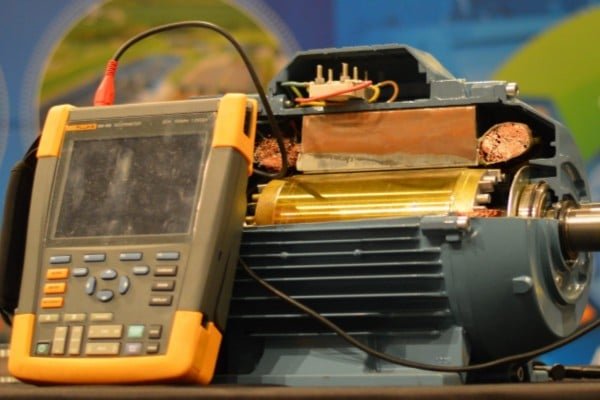
Regular measurement of shaft voltage during VFD operation helps identify developing issues before bearing failure occurs.
Frequently Asked Questions (FAQ)
What shaft voltage level is harmful to motor bearings?
Even voltages as low as 10–20 V can cause EDM discharge when lubrication film thickness is inadequate. Higher-frequency switching increases risk regardless of voltage magnitude.
How do I know if my motor is experiencing stray current damage?
Early symptoms include audible noise, rising vibration levels, and darkened grease. Fluting patterns confirm electrical erosion.
Why do VFDs increase the risk of bearing electrical erosion?
Rapid PWM switching produces high-frequency common-mode voltage, increasing shaft voltage buildup and discharge frequency.
Can insulated bearings alone prevent all bearing currents?
No. Insulated bearings block current through that bearing, but circulating currents may relocate to the opposite bearing or driven components.
What is the most cost-effective way to prevent bearing fluting?
Shaft grounding rings provide the best balance of performance, reliability, and cost for most industrial VFD applications.
