
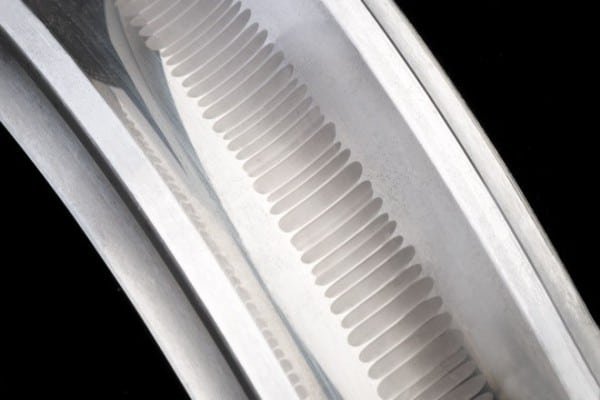

Electrical fluting is a patterned form of bearing damage caused by repeated electrical discharge events inside the raceway. It commonly appears in motors operated by variable frequency drives (VFDs) and is one of the most recognizable failure signatures of electrically induced bearing currents. Understanding what fluting is, how it forms, and how to prevent it is essential for engineers, technicians, and reliability teams managing modern electric motor assets.
In this complete guide, you will learn:
- The definition of electrical fluting and how it differs from simple pitting
- How EDM activity creates the characteristic washboard pattern on raceways
- The electrical conditions inside motors that cause fluting to develop
- Key acoustic, vibration, and visual indicators of fluted bearings
- How fluting affects motor performance and accelerates failure
- Effective mitigation techniques, including grounding and bearing insulation
- Frequently asked questions engineers encounter in the field
Let’s begin by defining electrical fluting and why it is uniquely associated with electrically stressed bearings.
What Is Electrical Fluting?
Definition and how fluting differs from simple pitting
Electrical fluting is a patterned bearing raceway defect formed by repeated electrical discharge machining (EDM) events. Unlike random pitting—where individual arcs remove isolated metal—fluting produces evenly spaced grooves, creating a washboard-like texture along the raceway.
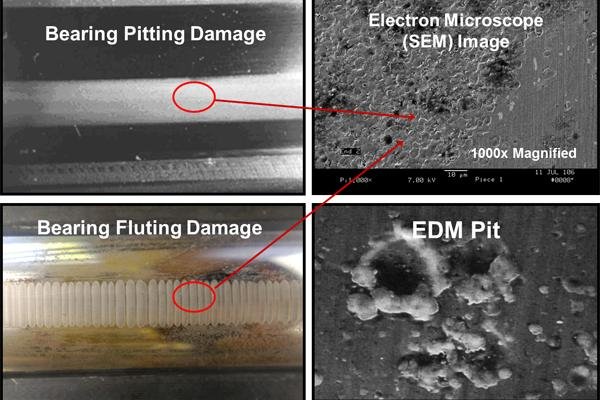
How electrical discharge machining (EDM) creates washboard-like patterns
Each time shaft voltage exceeds the lubricant film’s dielectric strength, a micro-arc jumps between rolling elements and raceways. Over thousands of discharge cycles, these arcs erode material in a periodic pattern that aligns with the bearing’s rolling frequency.
Why fluting is a repetitive, patterned failure unique to bearing raceways
Because rolling elements pass over the same locations at high frequency, recurring EDM events occur at consistent intervals. This generates the characteristic fluting pattern, which cannot be produced by purely mechanical wear modes.
Causes of Electrical Fluting
Shaft voltage and common-mode voltage from VFDs
High-frequency PWM switching in VFDs creates common-mode voltage. This voltage capacitively couples onto the rotor, charging the shaft and increasing the likelihood of EDM discharge through the bearings.
Capacitive discharge currents and EDM events
The stator–rotor airgap forms a parasitic capacitor. When the voltage across this capacitor builds up, it discharges through the path of least impedance—often the bearing contact points—causing electrical erosion.
Circulating currents in medium–large motors
Larger motors experience magnetic and structural asymmetries that induce circulating currents. These currents pass through both bearings unless one is electrically isolated.
Poor grounding or system asymmetry
Inadequate bonding, improper shield termination, or uneven grounding paths raise the impedance of safe discharge routes. This increases the probability that current will flow through the bearings.
Environmental and installation factors that accelerate fluting
Long cable runs, high switching frequencies, vibration, and contaminated lubricants all heighten the susceptibility of bearings to fluting damage.
Symptoms and How to Identify Fluting
Audible noise indicators (whining, growling, rhythmic tones)
Fluted bearings often produce a distinctive tonal noise. The rhythmic sound results from rolling elements passing over the patterned raceway grooves.
Vibration signatures of fluted bearings (high-frequency harmonics)
Fluting increases vibration at harmonic frequencies associated with ball-pass patterns. Condition monitoring systems often detect the problem before audible symptoms appear.
Visual inspection: washboard pattern on raceways
The defining indicator of fluting is a series of evenly spaced, parallel grooves worn into the raceway surface, resembling washboard ridges.
Early-stage vs advanced fluting characteristics
Early fluting begins as faint, shallow lines. Over time, grooves deepen, heat generation increases, and the bearing enters rapid failure progression.
How to distinguish fluting from mechanical wear
Mechanical wear lacks the periodic, high-frequency pattern. Brinelling, misalignment wear, or contamination produce irregular deformation, not the uniform fluted profile.
Effects of Fluting on Motor Performance
Increased friction, heat, and lubrication breakdown
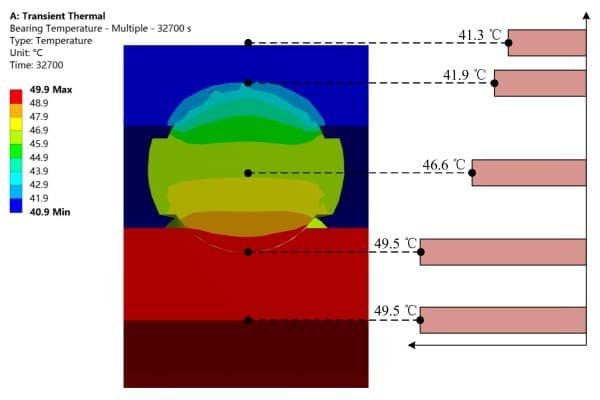
As rolling elements strike the fluted grooves, friction increases, leading to additional heat and accelerated lubricant oxidation.
Reduced bearing life and unexpected downtime
Once fluting begins, bearing life declines rapidly. Without intervention, failure may occur long before planned maintenance intervals.
System-level impacts in VFD motors and industrial machinery
Electrical fluting contributes to vibration, reduced motor efficiency, and premature motor replacement, especially in VFD-controlled equipment with high-duty cycles.
Prevention and Mitigation Methods
Shaft grounding rings and brushes
Grounding rings provide a low-impedance path for shaft voltage, preventing EDM events by diverting high-frequency currents away from the bearings.
Insulated or hybrid ceramic bearings
Coated bearings or hybrid ceramic bearings block circulating current paths and help eliminate discharge across the lubrication film.
Common-mode chokes, dv/dt filters, and sine-wave filters
Filtering technologies reduce common-mode voltage and steep voltage rise times, addressing shaft voltage at its source.
Proper grounding and cable installation practices
Correct bonding, shield termination, and cable routing reduce electrical noise and minimize parasitic current paths.
Recommended maintenance and inspection intervals
Regular vibration analysis and acoustic monitoring help detect early signs of fluting, allowing intervention before major equipment damage occurs.
Frequently Asked Questions (FAQ)
What causes electrical fluting to form specifically?
Fluting forms when repeated EDM discharges erode the raceway in a periodic pattern tied to the bearing’s mechanical geometry.
How long does it take for fluting to develop?
Depending on electrical stress levels, fluting can develop in weeks or months on VFD-driven motors without proper mitigation.
Can fluting occur in motors without VFDs?
Yes, but far less frequently. Poor grounding, electrostatic charge buildup, and asymmetrical fields can still create discharge events.
Can fluted bearings be repaired or must they be replaced?
Fluting is irreversible. Bearings with confirmed fluting must be replaced.
What is the difference between fluting, pitting, and frosting?
Pitting is random localized EDM damage; frosting refers to widespread micro-pitting; fluting is the patterned, groove-like wear caused by repeated electrical discharge cycles.
