
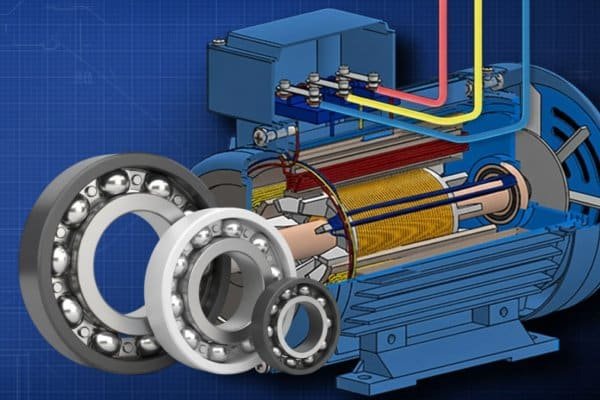

Insulated bearings play a critical role in improving the longevity and reliability of electric motors, especially those operated with variable frequency drives (VFDs). By preventing damaging electrical currents from passing through the rolling elements, insulated bearings protect raceways from premature wear while stabilizing motor performance in electrically harsh environments. For engineers and maintenance teams, understanding how insulation extends service life is essential for proper motor selection, retrofit decisions, and long-term reliability planning.
Throughout this article, you’ll discover:
- How electrical stress from VFDs shortens bearing life in standard motor designs
- The mechanisms by which insulated bearings block harmful shaft currents
- How insulation reduces mechanical wear, heat generation, and lubrication failure
- The materials and technologies that enhance bearing durability
- Real-world improvements in MTBF, uptime, and maintenance reduction
- Industries and applications where insulated bearings deliver the greatest value
- Cost–benefit factors engineers should consider when specifying insulated bearings
Let’s begin by exploring why electrical protection is directly connected to motor life extension.
Why Electrical Protection Matters for Motor Lifespan
How VFD-generated shaft voltage damages standard bearings
VFDs create high-frequency common-mode voltage that capacitively couples to the rotor. This produces shaft voltage, which seeks a discharge path—often through the bearings. Each discharge event erodes the raceway surface and accelerates wear.
EDM events, pitting, and fluting that shorten bearing life
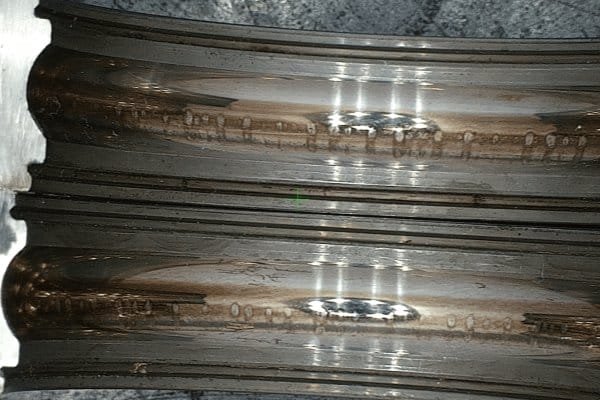
Electrical discharge machining (EDM) occurs when shaft voltage punctures the lubricant film. The resulting micro-arcs produce pitting, frosting, and eventually fluting, all of which dramatically reduce bearing lifespan and lead to premature motor failure.
How insulation blocks electrical current paths through bearings
Insulated bearings incorporate dielectric layers that prevent current from flowing through the rolling contact surfaces. By interrupting circulating and capacitive discharge currents, insulation eliminates the primary electrical failure mode in VFD-driven motors.
How Insulated Bearings Reduce Wear and Mechanical Stress
Preventing micro-arcing that degrades lubrication film
Electrical arcs superheat small areas of lubricant, causing carbonization, additive breakdown, and loss of film integrity. Insulated bearings stop these arcs entirely, preserving lubrication quality and slowing surface fatigue.
Eliminating heat spikes and surface micro-cracks
EDM events generate localized heat peaks far above normal operating temperatures. Insulation prevents these spikes, reducing the formation of micro-cracks that propagate into larger defects over time.
Improved stability under high-frequency electrical environments
Inverters produce voltage waveforms rich in high-frequency components. Insulated bearings maintain stable surface conditions and resist degradation under these environments, especially where long cable runs amplify reflected waves.
Reduced contamination risk with coated and hybrid bearing designs
Ceramic coatings and ceramic rolling elements are less susceptible to corrosion and contamination. Their non-conductive surfaces also help prevent electrical pathways from forming due to dirt or moisture.
Materials and Technologies That Improve Service Life
Ceramic coatings (aluminum oxide, zirconia) for raceway insulation
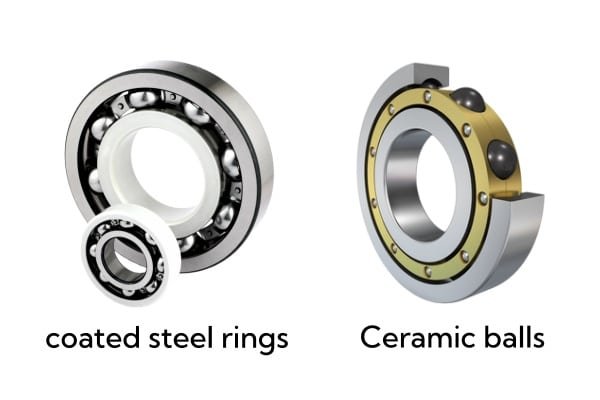
Ceramic-coated bearings use plasma-sprayed insulating layers on the outer or inner rings. These coatings offer high dielectric strength, robust surface hardness, and excellent resistance to electrical breakdown.
Hybrid bearings with ceramic balls and steel races
Hybrid bearings replace steel balls with silicon nitride ceramic balls. These balls are inherently non-conductive, significantly reducing electrical stress and friction while improving high-speed performance.
Advanced surface treatments and insulating layers
Modern designs incorporate multi-layer coatings, optimized bond layers, and enhanced surface treatments to increase durability, reduce porosity, and improve adhesion under thermal cycling.
Benefits of high dielectric strength and thicker insulation layers
Higher dielectric strength allows the bearing to withstand greater electrical stress. Thicker coatings provide increased voltage resistance and longer protection in high-frequency switching environments.
Longer Service Life in Real Applications
Reliability gains in VFD motors and inverter-duty systems
Insulated bearings are now standard in many inverter-duty motors because they prevent the primary failure mode associated with VFD operation: electrical bearing damage. This results in dramatically improved reliability.
Increased mean time between failures (MTBF)
By eliminating electrical erosion, insulated bearings extend bearing life by a factor of two to five in typical VFD applications. This improvement directly increases MTBF for the entire motor system.
Reduced unplanned downtime and maintenance costs
Fewer bearing failures translate into fewer motor replacements, reduced emergency repairs, and lower overall maintenance burdens. Plants benefit from improved uptime and predictable service schedules.
Comparison of lifespan: standard vs insulated vs hybrid bearings
Standard bearings fail early in electrically stressed environments. Ceramic-coated insulated bearings significantly extend life, while hybrid ceramic bearings offer the longest service in high-voltage, high-frequency systems.
Best Use Cases for Insulated Bearings
Motors powered by VFDs or long cable runs
Long cable runs increase reflected wave magnitude and shaft voltage, making insulated bearings essential for protecting motor internals.
High-voltage or high-frequency switching environments
Motors above 400 V or those driven at high PWM frequencies experience elevated electrical stress that insulated bearings are specifically designed to handle.
Industrial applications: HVAC, mining, pulp & paper, oil & gas
These industries rely on continuous operation and frequently use VFD-driven equipment. Insulated bearings provide critical protection in demanding environmental and electrical conditions.
Motors where downtime costs exceed bearing price
In process-critical operations, a single unplanned outage can outweigh the cost of insulated or hybrid bearings many times over, making them a high-value investment.
Cost–Benefit Considerations
Higher initial cost vs significant lifetime savings
Although insulated bearings cost more upfront, the reduction in bearing failures, motor replacements, and process interruptions results in substantial lifecycle savings.
Reduction in maintenance, inspection, and lubrication interventions
With fewer electrical failure modes, maintenance teams spend less time troubleshooting bearing-related issues and more time focusing on planned reliability improvements.
ROI in critical reliability environments
Insulated bearings often deliver ROI within the first avoided failure event, especially where motors are difficult to access or support vital processes.
When hybrid ceramic bearings provide the best long-term value
Hybrid bearings provide superior electrical isolation and mechanical performance. In high-duty or high-speed applications, they often deliver the highest long-term value despite higher initial cost.
Frequently Asked Questions (FAQ)
Do insulated bearings really extend motor life in all cases?
They extend life wherever electrical stress is present. In standard line-powered motors without VFDs, the benefit is smaller, but in VFD-driven systems, insulated bearings provide major lifespan gains.
How much electrical stress can an insulated bearing withstand?
Typical ceramic coatings withstand 500–2000 V, depending on thickness and material. Hybrid ceramic bearings withstand even higher electrical stress due to the non-conductive rolling elements.
Are ceramic-coated bearings better than hybrid bearings?
It depends on the application. Ceramic-coated bearings are cost-effective and suitable for most VFD environments. Hybrid bearings offer superior insulation and mechanical performance but at a higher cost.
Can insulated bearings eliminate all bearing currents?
No. They block circulating currents and EDM events but may not stop high-frequency common-mode voltage. Many systems still require shaft grounding devices to fully protect the motor.
When is shaft grounding also required even with insulated bearings?
In high-voltage motors, long cable applications, or installations with elevated common-mode voltage, grounding rings should be paired with insulated bearings for complete protection.

一条评论
Pingback: Bearing Insulation Breakdown Voltage: 7 Key Influencing Factors