
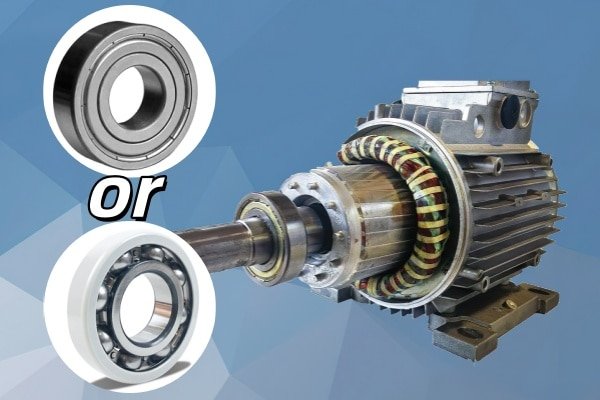

Insulated bearings are widely used in modern electric motors—especially VFD-driven and high-voltage systems—to prevent electrical discharge machining (EDM) damage. Many maintenance teams wonder whether an insulated bearing can simply replace a standard bearing during overhaul or troubleshooting. In many cases, the answer is yes—but only if certain mechanical, electrical, and installation requirements are met. This practical guide explains when the replacement is appropriate, what compatibility checks are necessary, and how to ensure proper performance after installation.
In this complete guide, you will learn:
- When insulated bearings are physically interchangeable with standard bearings
- Which compatibility factors must be checked before replacement
- Electrical tests (IR, hipot, shaft voltage measurement) are required for safe use
- Common applications where insulated bearings provide major reliability benefits
- Situations where insulated bearings should not replace standard ones
- Best installation practices to avoid damaging the ceramic coating
- Practical, field-oriented FAQ for engineers and maintenance technicians
Let’s begin by clarifying when an insulated bearing can directly replace a standard bearing without modification.
When an Insulated Bearing Can Replace a Standard Bearing
Direct physical interchangeability (same dimensions, same internal clearance)
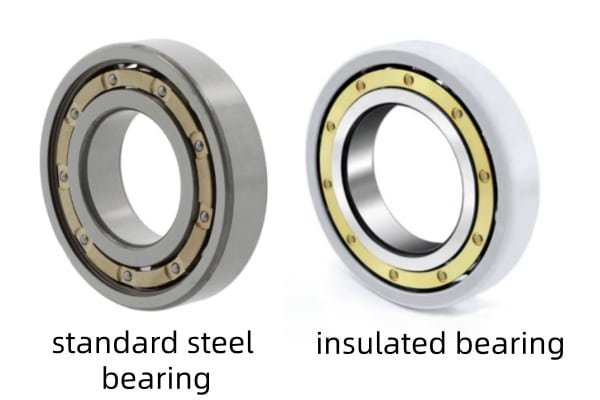
If the insulated bearing matches the standard bearing’s bore, outside diameter, width, shoulder geometry, and internal clearance (often C3 or C4 for motor applications), it can be swapped in without mechanical modification. Most OEM insulated bearings follow ISO and ABMA dimensional standards.
Replacement during VFD upgrades or electrical mitigation upgrades
Any time a motor is upgraded to VFD control or fitted with long cable runs, an insulated bearing is a recommended replacement to prevent electrical bearing damage. Installing insulation during the upgrade avoids unexpected failures after startup.
When shaft voltage or EDM damage is suspected
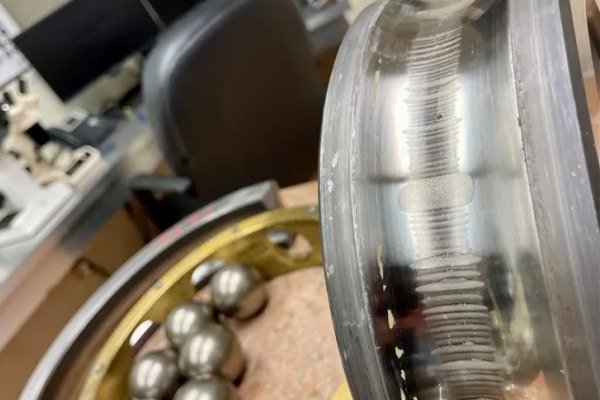
If inspection reveals pitting, frosting, or fluting on raceways, installing insulated bearings is often the most effective corrective action—along with grounding improvements or shaft grounding rings.
Applications needing enhanced reliability or extended bearing life
In continuous-duty operation, remote installations, and mission-critical processes, insulated bearings significantly extend motor service life and justify their higher cost.
Compatibility Issues to Check Before Replacement
Dimensional equivalence: bore, OD, width, shoulders, tolerances
The insulated bearing must match all dimensional parameters of the original. Since coatings add thickness to the outer ring, bearing manufacturers compensate by machining the steel substrate before coating. Technicians should verify catalog dimensions before ordering replacements.
Bearing internal clearance (C3, C4 for VFD motors)
VFD motors typically require C3 or C4 clearance to handle thermal expansion and high-frequency vibration. Always verify the correct clearance specified by the OEM.
Load rating differences between insulated vs standard bearings
Ceramic coatings slightly alter raceway geometry and heat dissipation, which may affect dynamic load ratings. Ensure the insulated version meets or exceeds the original bearing’s load requirements.
Temperature limits of coating materials
Plasma-sprayed ceramics have excellent heat tolerance, but polymer-based coatings have lower temperature limits. Make sure the insulation type matches the motor’s operating temperature range.
Mechanical concerns: coating brittleness, press-fit stresses
The ceramic layer can crack or chip if improper mounting force is used. Avoid hammering, localized loading, or high-interference fits. A cracked coating loses its dielectric performance.
Electrical Requirements and Testing Considerations
Insulation resistance thresholds (IR test/megger test expectations)
After installation, technicians should perform insulation resistance (IR) testing between the bearing outer ring and motor frame. Typical IR values exceed several megaohms, depending on coating thickness and OEM requirements.
Dielectric strength and HIPOT testing standards
Hipot testing verifies the insulation layer can withstand expected shaft voltage levels. Many insulated bearings are rated from 500–2000 V, while hybrid ceramic bearings tolerate even higher voltages due to non-conductive balls.
How insulation thickness affects breakdown voltage
Thicker coatings generally increase breakdown voltage, but also introduce tighter dimensional tolerance requirements. Always select bearings with verified OEM dielectric ratings.
Measuring shaft voltage and bearing current risks before choosing insulation
A quick shaft-to-ground oscilloscope test helps identify whether insulation is required. Long VFD cables, high switching frequencies, or elevated common-mode voltage indicate high risk.
When grounding rings are required, even with insulated bearings
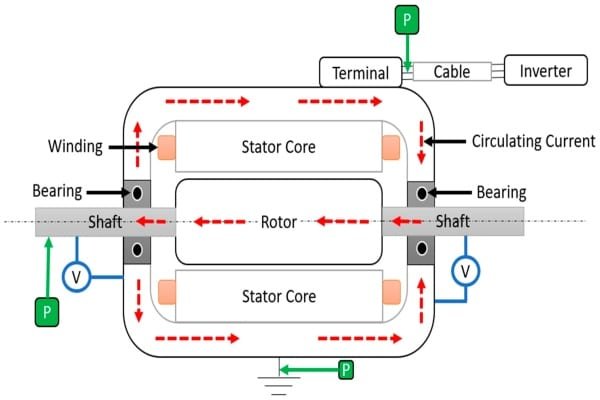
Insulated bearings block circulating currents but do not eliminate high-frequency common-mode voltage. Grounding rings should be used on the opposite end of the motor to ensure complete protection.
When Replacing a Standard Bearing With an Insulated One Is Recommended
VFD motors with high switching frequency or long cable lengths
These installations generate significant shaft voltage and require insulation to protect the bearings.
Motors experiencing pitting, frosting, fluting, or EDM patterns
If any electrical damage is present, insulated bearings help prevent recurrence after repair.
High-voltage or high-harmonic industrial environments
Motors above 400 V or exposed to harmonic distortion benefit from ceramic insulation layers.
Motors operating in critical uptime applications
Industries such as mining, paper, HVAC, oil & gas, and manufacturing rely on insulated bearings to reduce unplanned outages.
When insulation prevents recurring failures or premature wear
If a motor repeatedly fails due to bearing currents, replacing one bearing with an insulated version is often the most effective long-term solution.
When an Insulated Bearing Should Not Replace a Standard Bearing
When both sides of the motor must not be insulated (risk of circulating paths)
Insulating both bearings can trap harmful currents inside the motor. Typically, only one bearing—usually the non-drive end—is insulated unless the OEM specifies otherwise.
When hybrid bearings or grounding rings provide better protection
In extremely high-frequency environments, hybrid ceramic bearings or dedicated grounding systems may provide superior protection compared to coated bearings alone.
Applications with extreme vibration or shock loads (coating integrity concerns)
Ceramic coatings are strong but brittle. Motors exposed to heavy shock or impact loads may require different mitigation methods.
Motors designed for conductive bearings (specialized grounding paths)
Some motors intentionally use conductive bearings to ground static charge. Replacing these with insulated bearings can interfere with the intended protection system.
Installation Notes & Best Practices
Press-fitting insulated bearings without damaging the coating
Always apply mounting force to the correct ring—never across the coated surface. Use a press or induction heater rather than hammering or drifting tools.
Handling precautions to avoid chips or cracks in ceramic layers
Do not drop, pry, or clamp across the coated areas. Ceramic coatings can fracture if mishandled.
Verifying insulation resistance after installation
Perform an IR test to ensure the coating was not damaged during mounting. Any reading below OEM requirements may indicate a crack or contamination.
Recommended tools and measurement procedures
Use micrometers, feeler gauges, IR testers, and digital oscilloscopes when diagnosing shaft voltage. Proper tools ensure that electrical and mechanical checks are accurate.
Frequently Asked Questions (FAQ)
Can I upgrade only one bearing to an insulated type?
Yes—typically the non-drive end (NDE) bearing is insulated. This prevents circulating currents while leaving the drive end available for grounding if needed.
Does using an insulated bearing eliminate the need for shaft grounding?
No. Insulated bearings block some current paths but do not eliminate high-frequency common-mode voltage. Grounding rings are often still required.
Is there a performance difference between ceramic-coated and hybrid bearings?
Hybrid bearings provide higher electrical resistance and better high-speed performance, but ceramic-coated bearings are more cost-effective and widely used.
How long does the insulation layer last in a real motor?
Ceramic coatings are extremely durable and typically last the full service life of the bearing—provided installation is done correctly and electrical stresses remain within rating.
What electrical tests should be done after replacement? (IR, hipot, dielectric test)
Perform at minimum: an IR test, optional hipot testing (OEM-dependent), and a shaft voltage measurement during startup to confirm proper electrical protection.
