
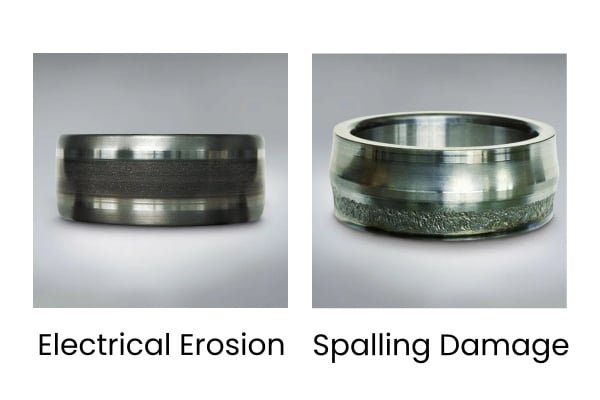

When a bearing fails, the raceway tells a story. One of the most common yet confusing “plot twists” is the presence of pitting—small indentations on the metal surface. Is it a result of mechanical fatigue caused by overloading, or is it electrical erosion caused by stray currents from a Variable Frequency Drive (VFD)? Misdiagnosing the root cause can lead to applying the wrong fix, resulting in repeated, costly failures.
In this comparison guide, you will learn:
- How to distinguish electrical pitting (EDM) from mechanical spalling.
- The distinct visual signs: “molten” craters versus “fractured” flakes.
- Why VFD-induced currents create a “frosted” appearance on raceways.
- The difference in auditory warning signs between the two failure modes.
- Targeted solutions for each type of damage (Grounding vs. Lubrication).
Let’s examine the microscopic evidence to determine exactly what is destroying your bearings.
What is Bearing Pitting? (The Basics)
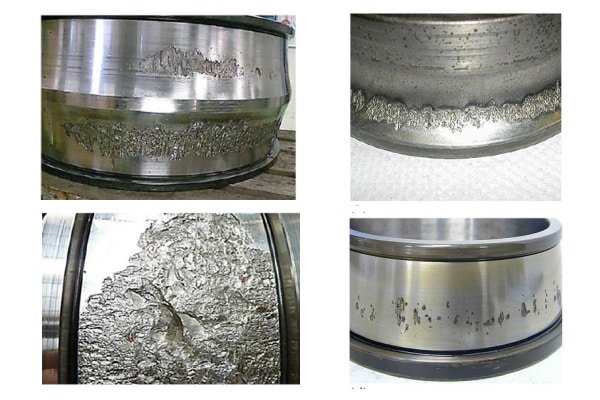
Pitting is a general term for the removal of material from the bearing raceways or rolling elements, leaving behind cavities. While the result—vibration and failure—is the same, the mechanism of removal differs fundamentally between electrical and mechanical causes.
Why Correct Diagnosis Matters
If you treat electrical pitting by simply changing the grease or increasing the bearing load rating (mechanical fixes), the failure will recur within weeks. Conversely, installing a shaft grounding ring on a motor suffering from mechanical fatigue will be a waste of money. Accurate identification is the first step in reliability engineering.
Analyzing Electrical Pitting (EDM Damage)
Electrical pitting is caused by the passage of current through the bearing. It is a thermal process, not a load-based one.
Visual Appearance: Micro-Craters and Frosting
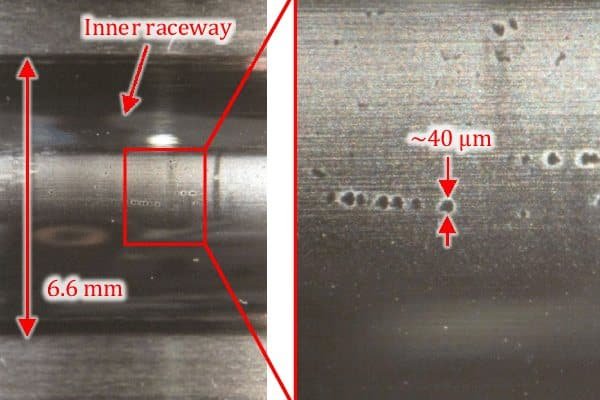
Electrical pitting begins as microscopic craters. Under magnification, these pits appear round with molten edges. The intense heat of the electrical arc (up to 4,000°C) melts the steel, and the material is ejected or vaporized.
To the naked eye, thousands of these tiny pits create a “frosted” or dull gray appearance. It often looks like the surface has been sandblasted. This frosting is typically uniform across the affected area.
The Progression: From Pitting to Fluting
If left unchecked, electrical pitting evolves into fluting. The vibration caused by rolling over the pits creates a resonance, causing the arcs to concentrate in bands. This carves the deep, rhythmic “washboard” grooves characteristic of VFD damage.
Analyzing Mechanical Pitting (Surface Fatigue)
Mechanical pitting (often called spalling or flaking) is caused by subsurface shearing stress. It is a fatigue process.
Visual Appearance: Irregular Spalling
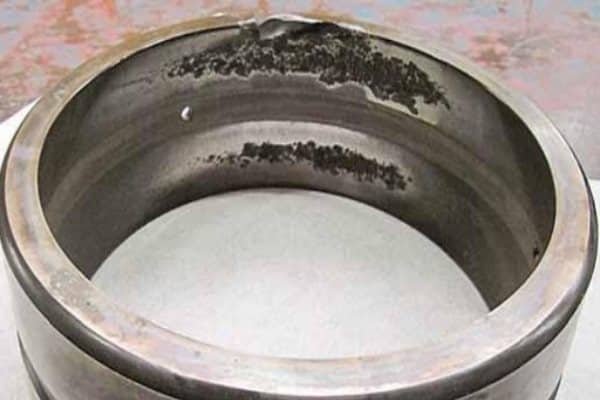
Mechanical pits are typically larger and more irregular than electrical pits. They have sharp, fractured edges rather than melted ones. It looks like flakes of metal have chipped away from the surface.
Unlike the uniform “frosting” of electrical damage, mechanical pitting often starts as a few isolated spots that grow rapidly as the edges break off (spalling).
Location of Damage
Mechanical pitting is almost exclusively found in the load zone of the bearing (the area supporting the shaft weight or tension). Electrical pitting, however, can occur anywhere the oil film breaks down, often covering a wider circumference of the raceway.
Critical Comparison: Electrical vs. Mechanical (Side-by-Side)
Here is how to differentiate the two when you have the bearing on the workbench.
| Feature | Electrical Pitting (EDM) | Mechanical Pitting (Fatigue) |
|---|---|---|
| Microscopic Shape | Round, crater-like, smooth/molten bottom | Jagged, irregular, sharp/fractured bottom |
| Surface Texture | Dull, frosted, “sandblasted” look | Rough, flaking, “chipped” look |
| Color | Often dark gray or black (burnt grease) | Metallic silver (fresh steel exposed) |
| Auditory Sign | High-pitched whine or screech | Low-frequency rumble or growl |
| Failure Speed | Rapid (Weeks/Months) | Gradual (End of L10 life) |
Solving the Problem (Corrective Actions)
Once you have identified the culprit, apply the specific cure.
Fixing Electrical Pitting
Since the root cause is voltage, you must manage the electrical path.
- Shaft Grounding Rings (SGR): Install these to bleed shaft voltages safely to the ground, bypassing the bearing.
- Insulated Bearings: Use ceramic (hybrid) bearings or coated bearings to block the current flow entirely.
- Cable Shielding: Upgrade to symmetric VFD cables to reduce common-mode voltage generation.
Fixing Mechanical Pitting
Since the root cause is stress or lubrication, focus on mechanical factors.
- Lubrication: Check for proper viscosity and cleanliness. Contaminated grease accelerates fatigue.
- Alignment: Ensure the shaft is properly aligned to prevent localized overloading.
- Load Rating: Verify the bearing is sized correctly for the application loads.
Frequently Asked Questions (FAQ)
Can lubrication prevent electrical pitting?
No. While conductive grease exists, it is generally a temporary measure. Standard grease cannot stop high-voltage VFD arcs. Mechanical lubrication improvements will not stop electrical currents.
Does mechanical pitting lead to electrical damage?
Indirectly, yes. As mechanical spalling contaminates the grease with metal particles, the grease becomes more conductive, potentially lowering the threshold for electrical arcing if shaft voltages are present.
How do I verify if the pitting is electrical?
The definitive test is measuring the shaft voltage using an oscilloscope while the motor is running. If you see voltage spikes >10V matching the switching frequency, the pitting is almost certainly electrical.
