
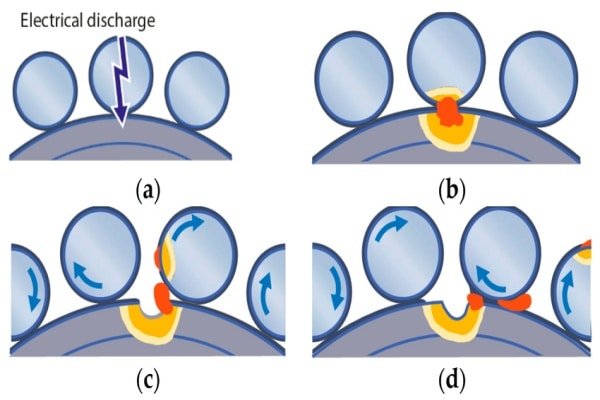

To the naked eye, a bearing failure looks mechanical: vibration, noise, and seized rollers. However, in modern VFD-driven motors, the root cause is often sub-microscopic physics. Electrical arcing—technically known as Electrical Discharge Machining (EDM)—is a violent thermal event happening on a molecular scale. Understanding how an insulated bearing prevents this damage requires looking beyond simple “rubber vs. metal” concepts and diving into equivalent circuit models, dielectric thresholds, and thermodynamics. This technical explainer demystifies the science of arcing prevention.
1. The Mechanism of Arcing: What Happens Without Insulation?
Before understanding the cure, we must understand the disease. A standard steel bearing in an electric motor acts as a component in an unintended electrical circuit.
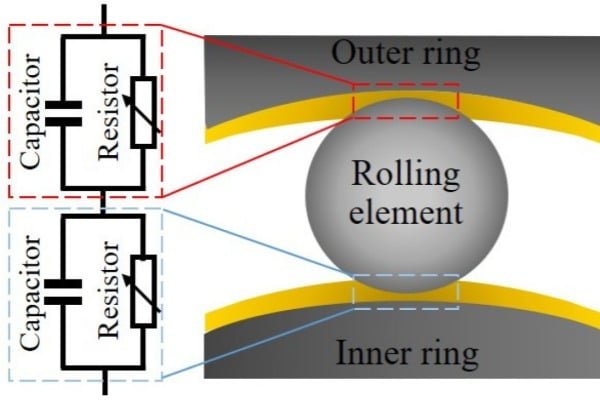
The Bearing as a Capacitor
From an electrical engineering perspective, a bearing is a capacitor.
• Plate 1: The rotating Inner Ring/Balls.
• Plate 2: The stationary Outer Ring.
• Dielectric: The thin film of non-conductive grease separating them.
As the motor spins, voltage accumulates on the rotor shaft (Plate 1) due to parasitic capacitive coupling from the stator windings.
The Voltage Buildup Phase
The Common Mode Voltage generated by a VFD charges this “bearing capacitor.” The voltage potential on the shaft rises relative to the ground. The grease film holds this charge back—up to a point.
The Breakdown Event (The Arc)
Every insulator has a limit. For a typical grease film (approx. 1 micron thick), the dielectric breakdown voltage is roughly 10 to 30 Volts.
The Spark: Once the shaft voltage exceeds this 30V threshold, the grease film’s resistance collapses. The stored energy discharges instantaneously across the gap. This is the arc.
The Aftermath: Micro-Welding
According to IEEE research, the core of this microscopic arc reaches temperatures between 3,000°C and 10,000°C.
Thermodynamics: This intense, localized heat melts a tiny spot of steel on the raceway. As the bearing rotates, this molten spot cools and tears away, leaving a crater (pit). This process is identical to industrial EDM machining, but uncontrolled and destructive.
2. How Insulation Blocks the Arc (The Engineering)
Insulated bearings introduce a barrier that fundamentally alters the circuit parameters.
Adding Resistance to the Circuit
By applying a layer of Aluminum Oxide (Al₂O₃) to the bearing ring, we introduce a massive resistor into the circuit.
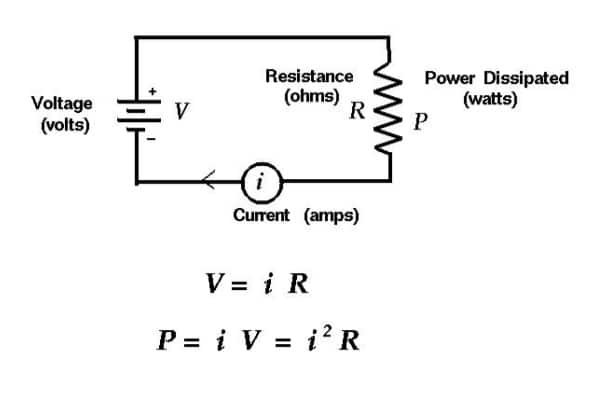
Ohm’s Law (I = V/R): A standard steel bearing has near-zero resistance once the film breaks. An insulated bearing has >50 Megaohms (50 × 10⁶ Ω). Even if voltage is present, the high resistance limits the current (I) to negligible micro-amps, preventing the formation of an energy-dense arc.
Increasing Breakdown Voltage Threshold
Standard grease breaks down at ~30V. A standard INSOCOAT layer (100µm) has a breakdown voltage of >1,000V DC.
The Result: The shaft voltage (typically peaking at 20-60V in VFD motors) never comes close to the 1,000V threshold required to jump the ceramic gap. The arc is physically impossible under normal operating conditions.
Reducing Capacitance (The Hybrid Bearing Advantage)
Hybrid bearings (ceramic balls) take this a step further.
Physics (C = εA / d): Capacitance (C) is inversely proportional to distance (d).
• Coated Bearing: Distance d is the coating thickness (~0.1mm).
• Hybrid Bearing: Distance d is the ball diameter (~10mm).
Increasing the distance by 100x drastically reduces capacitance. This high impedance blocks not only DC arcs but also High-Frequency AC currents that might otherwise pass through a thin coating.
3. Visualizing the Prevention: Before and After
What does “protection” look like in the real world?
The Failure Patterns We Avoid
Fluting: Without insulation, thousands of pits accumulate. The rolling elements bounce over these pits, creating resonant vibration that carves deep, rhythmic grooves (fluting) into the raceway.
Burnt Grease: The arc heat “cracks” the oil molecules, turning grease into abrasive black carbon sludge.
The Protected State
With insulation, the electrical path is broken. The raceways remain mirror-smooth, and the grease retains its color and lubricity. The bearing fails only when it reaches its natural mechanical fatigue limit (L10 life), often years later than an unprotected bearing.
4. Comparing Strategies: Blocking vs. Diverting
Insulation isn’t the only way, but it is often the most robust.
Insulation (The Blocking Strategy)
Method: Stops current from flowing through the bearing.
Best For: Circulating currents in large motors; preventing EDM in smaller motors where grounding is difficult.
Grounding Rings (The Diverting Strategy)
Method: Provides a low-resistance path (short circuit) from shaft to ground, bypassing the bearing.
Best For: Bleeding off shaft voltage in VFD applications. Often used in conjunction with insulation.
5. Material Science: Why Ceramic Works
Why use ceramic?
Dielectric Strength: Aluminum Oxide has a dielectric strength of ~15 kV/mm, far superior to air or oil.
Bond Strength: Plasma spraying creates a mechanical bond strong enough to withstand the thermal expansion of the steel ring without delaminating.
Frequently Asked Questions (FAQ)
Does grease type affect arcing potential?
Yes. Conductive greases exist to bleed off static, but they often fail under the high-frequency conditions of VFDs. Insulation is a more reliable solution.
At what voltage does bearing arcing start?
Arcing typically begins when the shaft voltage peak-to-peak exceeds 10V to 30V, depending on the bearing temperature and grease condition.
Why doesn’t standard steel resist arcing?
Steel is a conductor. It offers zero resistance to current flow. Once the thin insulating oil film is breached, there is nothing to stop the full energy of the arc from melting the steel.
