
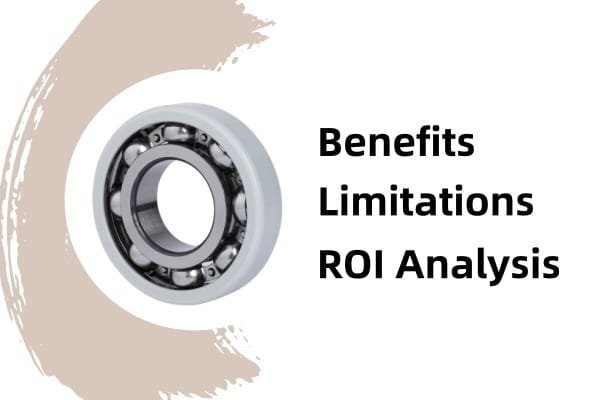

For industrial motor users facing electrical bearing damage, the market offers two primary solutions: Hybrid Ceramic bearings and Ceramic Coated bearings. While Hybrid bearings offer superior performance, their high price tag can be a barrier for large machinery. This is where Ceramic Coated bearings (often referred to by trade names like INSOCOAT) shine. By applying a thin, insulating layer of ceramic to standard steel, they offer a cost-effective shield against stray currents. However, they are not a silver bullet. This guide analyzes the specific benefits, mechanical limitations, and return on investment to help you decide if coating is the right choice for your application.
In this buyer’s guide, you will examine:
- Why Aluminum Oxide (Al2O3) is the industry standard material for insulation.
- The significant cost advantage of coated bearings over hybrid alternatives.
- Critical mechanical limitations: Fragility during installation and size constraints.
- The “Capacitor Effect”: Why coatings might fail in high-frequency SiC drive applications.
- A decision matrix: When to buy Coated vs. when to upgrade to Hybrid.
Let’s weigh the pros and cons of surface insulation.
What is Ceramic Coating on Bearings? (The Technology)
Before buying, it is essential to understand what you are paying for.
Material Science: Why Aluminum Oxide (Al2O3) is Standard
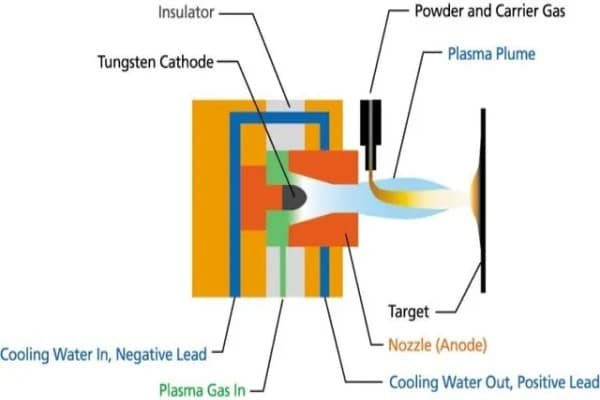
Manufacturers use plasma spray technology to deposit a layer of ceramic onto the bearing ring. The material is almost exclusively Aluminum Oxide due to its excellent bond strength with steel and high electrical resistance (>50 MΩ).
Note on Zirconia: While Zirconia (ZrO2) is a ceramic, it is rarely used for bearing coatings because its thermal expansion properties differ too much from steel, leading to delamination risk under heat cycling.
The Process: Plasma Spraying & Resin Sealing
The ceramic is melted at 10,000°C and sprayed onto the steel. Crucially, as noted by NSK, the porous ceramic layer must then be sealed with a resin. This sealing step prevents moisture from penetrating the coating, ensuring the insulation works even in humid environments.
Key Benefits: Why Choose Coated Bearings? (Pros)
Coated bearings are the workhorse of the electrical protection world.
Cost-Effectiveness: The Main Advantage
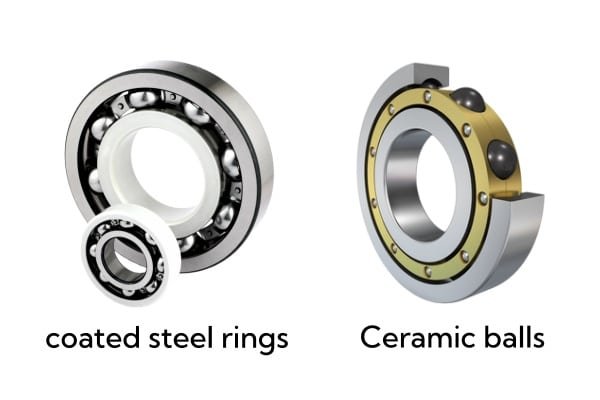
The primary selling point is price. For large bearings (e.g., >100mm bore), a Ceramic Coated bearing is typically 30% to 50% cheaper than a Hybrid Ceramic bearing. This is because manufacturing a large steel ring and coating it is far less expensive than manufacturing large, defect-free solid ceramic balls.
Retrofit Compatibility
The coating layer is thin (typically 100µm – 300µm) and is ground to standard ISO tolerances. This means a coated bearing is a direct, drop-in replacement for a standard steel bearing without modifying the housing or shaft.
Effective Protection against Standard EDM
For standard Variable Frequency Drive (VFD) applications, the coating provides ample resistance (breakdown voltage >1,000V DC) to block EDM currents and circulating currents.
Critical Limitations: What Buyers Must Know (Cons)
Understanding these limits prevents costly installation errors.
Mechanical Fragility: The Installation Risk
Ceramic is hard but brittle. As emphasized by NKE Austria, striking the coated ring directly with a hammer can cause the insulation to chip or crack.
The Consequence: A chipped coating offers zero protection. Installers must use induction heaters or pressing tools that only contact the steel face.
Size Constraints
Plasma spraying is difficult on very small surfaces. Therefore, coated bearings are generally not available for small motors (e.g., <50mm bore). For small motors, Hybrid bearings are often the only insulated option.
High-Frequency Limitation: The “Capacitor Effect”
In modern Silicon Carbide (SiC) drives with extremely high switching frequencies, the thin coating acts as the dielectric of a capacitor. High-frequency AC current can capacitively couple through the coating, potentially bypassing the insulation. In these ultra-high-frequency cases, Hybrid bearings are superior due to the thicker insulation of the solid ceramic ball.
Comparative Decision Guide: Coated vs. Hybrid Ceramic
Use this rule of thumb for procurement.
When to Buy Coated (INSOCOAT)
- Application: Large Motors (>100 HP), Generators, Standard VFDs.
- Budget: Cost-sensitive maintenance or OEM production.
- Goal: Stopping Circulating Currents.
When to Upgrade to Hybrid Ceramic
- Application: Small Motors, High-Speed Spindles, EV Traction Motors.
- Environment: Poor lubrication (ceramic runs cooler) or contamination.
- Goal: Handling High-Frequency SiC Drive noise or total electrical isolation.
Frequently Asked Questions (FAQ)
Can I coat the inner ring instead of the outer ring?
Yes. Inner ring coating is available and recommended for applications where the outer ring rotates or where the housing fit is loose, which could wear down an outer coating.
Does ceramic coating affect the bearing’s heat dissipation?
Negligibly. While ceramic is a thermal insulator, the layer is so thin (~0.1mm) that it does not measurably impact the bearing’s operating temperature.
What is the lifespan difference between coated and steel bearings?
In an electrical environment, a coated bearing can last 5-10 times longer than a standard steel bearing by preventing fluting damage. Mechanically, its fatigue life is identical to standard steel.
