
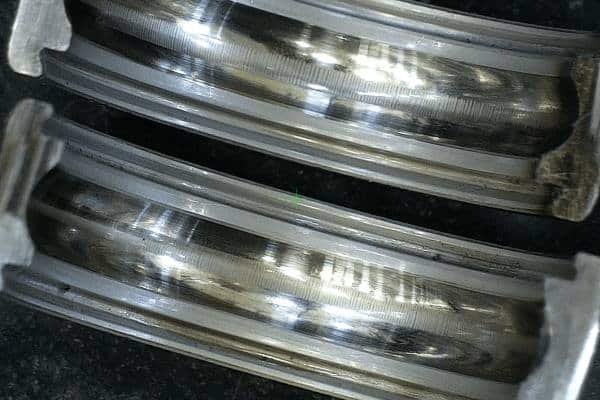

Electrical erosion is one of the most common—and costly—failure mechanisms in modern electric motors, especially those powered by VFDs. When shaft voltage or stray electrical currents pass through rolling bearings, they remove material from raceways and rolling elements through microscopic electrical discharges. For maintenance teams and reliability technicians, understanding electrical erosion is essential for preventing repeated bearing failures, reducing downtime, and improving motor health.
Throughout this article, you’ll learn:
- What electrical erosion is and how it differs from normal mechanical wear
- The electrical conditions inside motors that generate damaging bearing currents
- How to identify pitting, frosting, fluting, and other erosion patterns
- Practical inspection, vibration, and electrical testing methods
- How to stop electrical erosion using grounding, insulation, and filtering
- When each mitigation method is appropriate in real-world applications
- Answers to common field questions about erosion progression and prevention
Let’s start with a simple and practical definition of electrical erosion.
What Is Electrical Erosion?
Definition of electrical erosion vs mechanical wear
Electrical erosion is the removal of metal from bearing surfaces caused by electrical discharge events. Unlike mechanical wear—which results from load, contamination, or lubrication breakdown—electrical erosion occurs when voltage discharges across the lubricant film and creates microscopic arcs inside the bearing.
How electrical discharge removes material from bearing surfaces
When shaft voltage exceeds the lubricant’s dielectric strength, a spark (EDM micro-arc) jumps between the rolling element and raceway. Temperatures at the arc point can exceed thousands of degrees, melting and vaporizing tiny pockets of metal that become pits or craters.
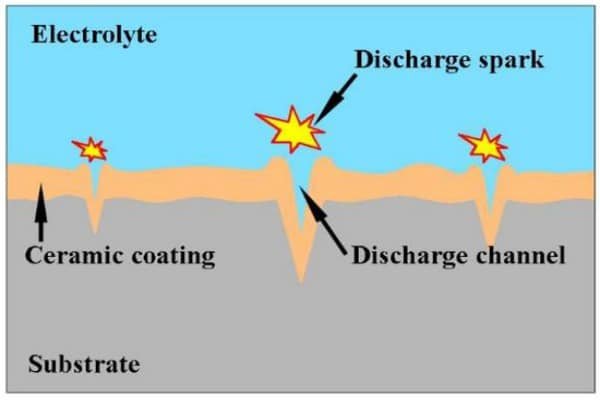
Relation to shaft voltage, common-mode voltage, and stray currents
VFDs generate high-frequency common-mode voltage that capacitively couples into the rotor and builds shaft voltage. Stray electrical currents—such as circulating currents in large motors—also contribute to erosion when they flow through bearings.
Where erosion typically appears (raceways, rolling elements, lubricant film)
Electrical erosion is commonly found on:
- Raceways — micro-pits, frost-like texture, or fluting bands
- Rolling elements — craters, hot spots, or burn marks
- Lubricant film — carbonization, darkening, and additive degradation
Causes of Electrical Erosion
Shaft voltage generated by VFDs and PWM switching
Pulse-width modulation (PWM) switches voltage at high frequencies. These fast edges create common-mode voltage that charges the motor shaft and discharges through bearings if no mitigation is present.
Capacitive coupling between stator and rotor
The motor’s airgap forms a parasitic capacitor. High-frequency components from the inverter charge this capacitor, producing shaft voltage even under no-load conditions.
High-frequency circulating currents
In medium and large motors, magnetic asymmetry can generate circulating currents that flow from one bearing, through the shaft, to the other bearing. These currents rapidly accelerate erosion.
Poor grounding or improper cable shielding
Weak grounding connections increase impedance, forcing electrical energy to discharge through the bearings. Incorrect VFD cable shielding or bonding practices worsen this effect.
Lubrication film breakdown under electrical stress
When the electric field across the lubricant film becomes too strong, it punctures the film and allows sparking to occur. Repeated punctures accelerate pitting and thermal degradation.
Environmental factors (humidity, contamination, temperature)
Moisture and conductive contaminants reduce lubricant dielectric strength, making electrical breakdown easier. High temperatures thin the film and increase arc frequency.
Types of Electrical Erosion Damage
Micro-pitting (early stage EDM craters)
The earliest sign is scattered microscopic pits, often visible only under magnification. These pits indicate that the lubricant film is being pierced by electrical discharge.
Frosting (widespread micro-erosion on raceways)
As EDM events multiply, the bearing surface becomes dull or frosted. This indicates widespread micro-erosion and degraded lubrication quality.
Fluting (patterned washboard damage caused by repetitive EDM)
Fluting produces rhythmic bands or grooves around the raceway. This occurs when rolling elements repeatedly pass over damaged points, forming a patterned washboard texture.
Arc craters and localized burn marks
Severe electrical discharges create deeper craters with discoloration or burn marks around the impact area, often indicating shaft voltage spikes.
Lubricant degradation due to dielectric breakdown
EDM activity burns additives, oxidizes oil, and produces carbon debris. Darkened or burnt-smelling grease is a strong indicator of electrical erosion.
How to Identify Electrical Erosion
Visual inspection markers: craters, stripes, frosting texture
Technicians should look for crater clusters, fluting bands, or gray, frosted surfaces. High magnification inspection is often required for early detection.
Audible symptoms (whining, buzzing, rhythmic tones)
Fluting produces rhythmic tones or whining sounds as rolling elements pass over patterned grooves. Early-stage erosion may cause a faint hiss or growl.
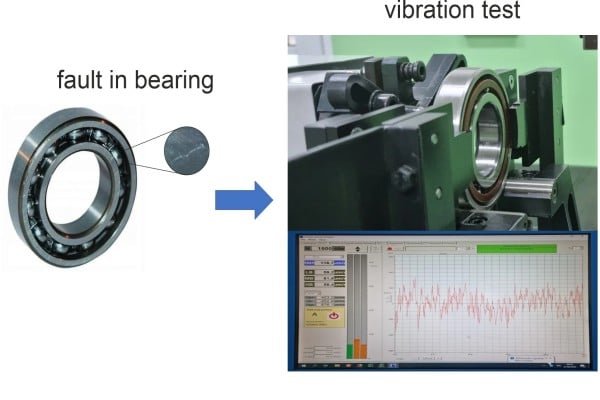
Vibration signatures associated with electrical bearing damage
Electrical erosion elevates vibration at ball-pass frequencies. Fluting introduces strong harmonics that are easily detected through condition monitoring.
Lubricant analysis for evidence of electrical breakdown
Signs include burnt odor, dark coloration, and the presence of metal particles or carbonized debris. These indicate high localized heat from EDM events.
Electrical tests: shaft voltage measurement, bearing current detection
An oscilloscope test can reveal voltage spikes on the shaft. Clamp-on HF current probes detect discharge currents that confirm electrical activity.
Prevention Methods
Shaft grounding rings or conductive brushes
Grounding rings provide a low-impedance discharge path, preventing voltage from building on the shaft. They are essential for many VFD-driven motors.
Insulated bearings and hybrid ceramic bearings
Insulated bearings block circulating currents by adding dielectric coatings. Hybrid ceramic bearings offer even stronger electrical isolation and improved mechanical performance.
Ceramic coating technologies (Al₂O₃, ZrO₂) and insulating layers
Ceramic-coated bearings use plasma-sprayed oxides with high dielectric strength to prevent EDM damage. These coatings are common in inverter-duty motors.
Filters (dv/dt, sine-wave, common-mode chokes) for VFD outputs
Filters reduce common-mode voltage and current, lowering the electrical stress placed on the bearings at the source.
Improved grounding, bonding, and cable design
Proper cable shielding, low-impedance grounding, and correct bonding greatly reduce harmful electrical currents in motor systems.
Maintenance practices to catch early erosion before failure
Routine shaft voltage checks, vibration monitoring, and lubrication inspection help detect electrical erosion early and prevent catastrophic bearing failure.
Best Use Cases for Each Mitigation Method
When grounding rings are sufficient
Grounding is effective when common-mode voltage is moderate and circulating currents are minimal. Ideal for small to mid-size VFD motors.
When insulated bearings are required
Insulated bearings are needed in high-voltage motors, long cable installations, and cases where circulating currents are a primary risk.
When both grounding and insulation must be combined
Critical or high-power inverter-duty motors often require both solutions: grounding to remove high-frequency currents and insulation to block circulating loops.
When hybrid bearings are the most cost-effective solution
Hybrid ceramic bearings provide excellent electrical protection and high-speed performance. They are ideal for motors where EDM damage has repeatedly occurred.
Frequently Asked Questions (FAQ)
What is the difference between erosion, pitting, and fluting?
Pitting is the earliest stage (small craters). Frosting is widespread micro-erosion. Fluting is patterned washboard wear. All are caused by electrical discharge.
Can electrical erosion occur without a VFD?
Yes. Poor grounding, electrostatic charge, or asymmetrical magnetic fields can generate shaft voltage even without a VFD, though VFDs increase the risk substantially.
How quickly does electrical erosion progress?
Under high electrical stress, erosion can progress from pitting to fluting within weeks or months. Early detection is critical.
Does electrical erosion always lead to bearing failure?
If untreated, yes. Electrical erosion accelerates wear, increases heat, damages lubrication, and eventually causes bearing seizure or catastrophic motor failure.
What is the most effective way to prevent EDM damage?
A combination of shaft grounding and insulated bearings offers the most complete protection in VFD-driven environments.
