
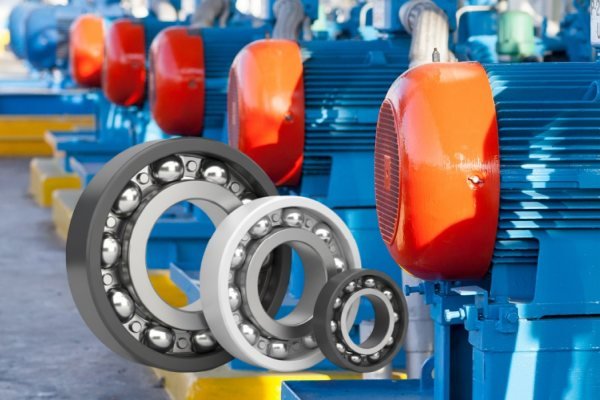

In the world of fluid handling, Variable Frequency Drives (VFDs) have become the standard for controlling flow and pressure, offering massive energy savings compared to throttling valves. However, this efficiency comes at a price. VFDs introduce harmful stray electrical currents that wreak havoc on pump motor bearings. For facility managers, the consequence is not just a noisy motor—it is the catastrophic failure of mechanical seals and the risk of hazardous fluid leaks. Using insulated bearings is no longer an optional upgrade; it is a critical specification for reliable pumping systems.
In this industrial application guide, you will learn:
- How VFDs generate shaft voltages that target pump bearings.
- The critical link between bearing vibration and mechanical seal failure.
- How to distinguish electrical fluting noise from hydraulic cavitation.
- Selection criteria for Coated vs. Hybrid bearings in centrifugal and vertical pumps.
- Best practices for grounding pump skids to prevent current loops.
Let’s analyze why protecting your bearings means protecting your entire process.
The VFD Challenge in Modern Pumping Systems
While VFDs optimize pump curves, they fundamentally alter the electrical environment of the motor.
The Hidden Cost of Flow Control
VFDs use Pulse Width Modulation (PWM) to regulate speed. This switching creates high-frequency Common Mode Voltage on the motor shaft. In a standard line-fed pump, this voltage doesn’t exist. In a VFD pump, it seeks the path of least resistance to ground—often through the motor bearings.
The Chain Reaction: Bearing to Seal Failure
In pump applications, the bearing is the first domino.
1. Electrical Erosion: Shaft voltage causes pitting and fluting in the bearing raceways.
2. Vibration: As the bearing degrades, shaft runout and vibration increase significantly.
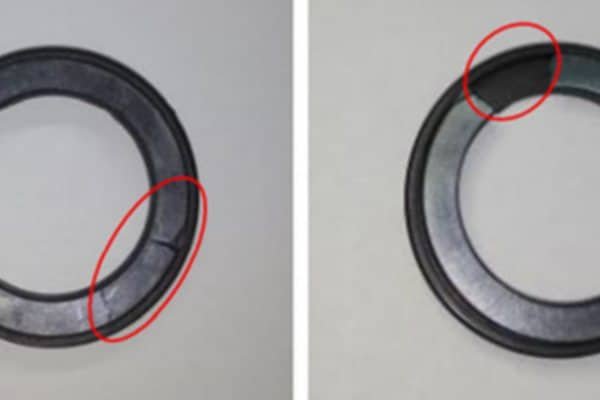
3. Seal Failure: Mechanical seals rely on incredibly tight tolerances (measured in lightbands). The vibration from the damaged bearing causes the seal faces to open or crack, leading to immediate fluid leakage.
Diagnosing Electrical Damage in Pump Motors
Is your pump noisy because of hydraulics or electronics?
Identifying “Fluting” Noise
Electrically damaged bearings emit a distinct high-pitched whine or screech that correlates with motor speed. This sound is constant and rhythmic.
Distinguishing Electrical Erosion from Cavitation
Cavitation sounds like pumping gravel or marbles—a random, crackling noise caused by collapsing vapor bubbles.
Electrical Fluting is a tonal, whistling sound.
If you hear the whistle and see black grease leaking from the bearing cap, it is almost certainly electrical damage, not cavitation.
Why Insulated Bearings are the Solution
The most robust fix is to physically block the current path.
Blocking the Path
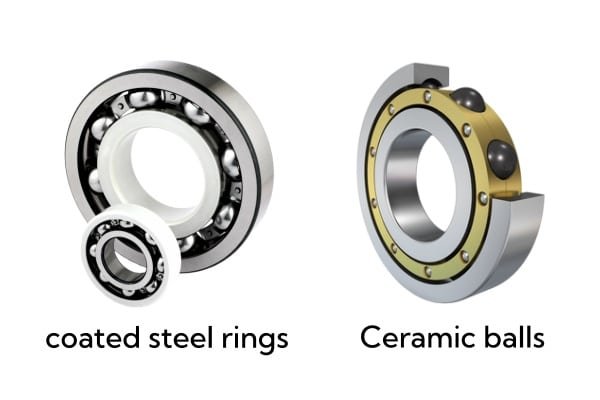
Insulated bearings feature a layer of non-conductive material (either a ceramic coating or ceramic rolling elements). This high impedance stops the voltage from discharging through the bearing, protecting the steel surfaces.
Coated (INSOCOAT) vs. Hybrid Ceramic
Coated Bearings: Typically sufficient for standard HVAC water pumps and general industrial pumps >100 HP. They are cost-effective and handle the circulating currents common in large frames.
Hybrid Ceramic Bearings: Recommended for critical chemical pumps, oil & gas applications, or where lubrication is marginal. Their superior hardness and lack of electrical capacitance make them the ultimate insurance policy.
Vertical Turbine Pumps
Vertical motors have heavy thrust bearings that carry the weight of the pump shaft and impeller. These bearings are expensive and difficult to replace. Using insulated thrust bearings is standard practice to prevent EDM damage, which can occur rapidly under high axial loads.
Installation & Grounding Best Practices
Proper installation ensures the insulation does its job.
Which End to Insulate?
For horizontal pumps suffering from circulating currents, insulate the Non-Drive End (NDE) bearing. This breaks the loop. For VFD-induced EDM currents in smaller motors, or where the pump is grounded through the piping, consider insulating both ends or using a hybrid bearing on the NDE and a grounding ring on the Drive End.
High-Frequency Grounding Straps
The motor frame and the pump casing must be at the same electrical potential. Use flat, braided grounding straps to bond the motor to the pump base. Standard round wire has too much impedance for high-frequency VFD noise.
Frequently Asked Questions (FAQ)
Do all VFD-driven pumps need insulated bearings?
It is highly recommended for any pump motor over 100 HP, and for critical smaller motors where reliability is paramount. The cost of a seal leak usually outweighs the cost of the bearing.
Can shaft voltage damage the pump impeller?
Rarely. The current typically grounds out through the motor bearings before reaching the coupling and impeller. However, if the motor bearings are insulated but the coupling is conductive, current could travel to the pump bearings.
What is the ROI of insulated bearings for HVAC pumps?
In a commercial building, a bearing failure means no cooling/heating. The ROI is realized by avoiding emergency service calls and tenant complaints. One prevented failure pays for the bearings for the life of the system.
